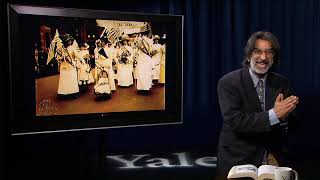
Progressive Reforms, Part 1 | America's Written Constitution with Akhil Reed Amar
YaleCourses, 22 min, 289 views, Aug 6, 2026
Chapters
Show descriptionHide description
New York Times v. Sullivan, Miranda, Griswold, Lawrence. None of them is strictly a Bill of Rights case. Akhil Reed Amar explains why they are all Fourteenth Amendment cases instead. This lecture argues that the constitutional world most Americans actually inhabit was built by amenders rather than founders. The original Bill of Rights bound only Congress, was barely enforced before the Civil War, and reached the states only through the Fourteenth Amendment, accomplishing what Madison had failed to get through the First Congress. The word "equal" applied to persons rather than states arrives with the Fourteenth as well. Amar then turns to the Progressive Era cluster and makes a specific claim: the Sixteenth Amendment supplied a national redistributive taxing power, the Seventeenth freed senators from state legislatures and made them willing to back national projects, and the Nineteenth doubled an electorate that has since leaned toward social welfare legislation. Together, he argues, those three amendments make the New Deal, the Great Society, and the Affordable Care Act constitutional matters rather than departures from the founding. Chapters: 00:00 What we owe to the amendments 01:46 Incorporation against the states 03:18 The amendment Madison could not pass 06:57 Where "equal" enters the Constitution 09:00 Washington, Jackson, and Lincoln 11:36 Why amendments arrive in generational clusters 13:06 From "Congress shall make no law" to "Congress shall have power" 14:41 Why so much more of life is now interstate 17:17 Sixteen plus seventeen plus nineteen Learning objectives: After watching, you'll be able to: - Explain incorporation and why it changed what the Bill of Rights means in practice - Identify which landmark rights cases rest on the Fourteenth Amendment - Describe the pattern by which amendments arrive in generational clusters - Contrast the localism of the early amendments with the nationalism of the later ones - Analyze how the Sixteenth, Seventeenth, and Nineteenth Amendments expanded federal capacity 📺 Watch the full playlist on YouTube: https://www.youtube.com/playlist?list=PLCq6-l8oFuvk 🎓 Enroll on Coursera for assessments and a certificate: https://www.coursera.org/learn/written-constitution 🌐 Explore more learning opportunities on Yale Online: https://online.yale.edu/courses/americas-written-constitution